
 Caterpillar
  Cummins
  Duramax (Chevy/GMC)
  Ford Power Stroke
 Acura
Acura Chrysler
 Honda
Honda Jaguar Land Rover
 Jeep
Jeep Mazda
Mazda Mini Cooper
 Mitsubishi
 Nissan
 Polaris
 Subaru
 Toyota



What drivers say about XOTIC PERFORMANCE™

Main Stud Kit 1970-1983 Nissan L24 L26 L28 6CYL
PART # SKU CP885

Verified Reviews
Original price
$122.60
-
Original price
$122.60
Original price
$122.60
$122.60
-
$122.60
Current price
$122.60
Availability:
in stock, ready to be shipped

Limited Lifetime Warranty on All Fasteners

Trusted in 30,000+ Builds

30-Day Satisfaction Guarantee

Free Shipping on Orders $100+
These are main studs, not head studs. Main and head studs serve different purposes—selecting the right one is crucial.
Why Main Studs?
Main studs provide superior clamping force compared to main bolts, reducing wear on block threads and assisting with main cap alignment. Unlike bolts, which twist during tightening, studs remain stationary, reducing the chance of main cap walking under high loads. They are especially beneficial in high-performance applications where increased stability and durability are required.
Disclaimer: Designed to secure crankshaft main bearing caps. This is NOT a head stud kit.
INSTALL GUIDE
This guide covers installation of the XOTIC PERFORMANCE™ CP885 main stud kit for the Nissan L24, L26 and L28 inline-six — the engine family behind the 240Z, 260Z, 280Z and 280ZX. Prefer a printable copy? Download the PDF manual.
These blocks are forty to fifty years old — inspect before you clamp. Chase every main thread before a stud goes in, and once the studs are torqued, check the main bores for size and roundness. Decades of heat cycles, plus a switch from bolts to studs, is exactly the combination that turns up a bore needing an align hone.
Why an L-series inline-six needs main studs
The L24 through L28 is one of the great over-built engines: a seven-main-bearing cast-iron inline-six that will idle happily at 200,000 miles. What it was never designed for is what people ask of it now — triples and a hot cam, a big-bore L28 stroker, or a turbo setup making double the factory output on a bottom end that left the factory during the Ford administration.
Main cap fasteners are what keep the crankshaft bearing bores round and located under that load. Studs do it better than bolts for a structural reason: a bolt is torqued into the block, so it twists and stretches at the same time, while a stud is threaded in finger-tight and stays still while the nut is torqued against it — loading the stud in pure tension. That produces more consistent, more accurate preload, the tensile force in the fastener that becomes clamp force in the joint. On an aged casting where the original bolt threads have been in and out more than once, that consistency is worth even more than it is on a fresh block. XOTIC PERFORMANCE™ main studs are manufactured from our premium XOTIC 7200 steel alloy and backed by a lifetime warranty.
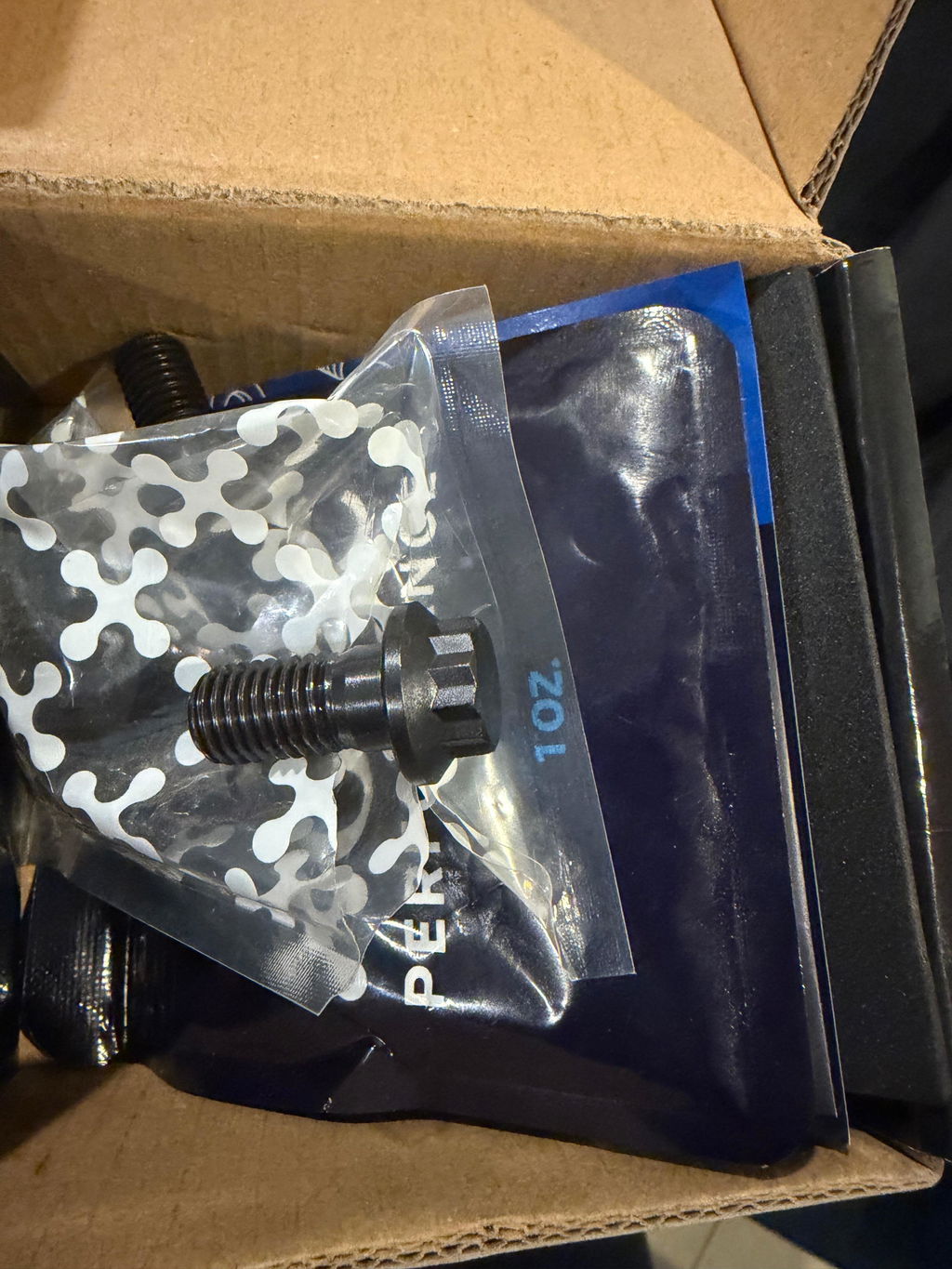
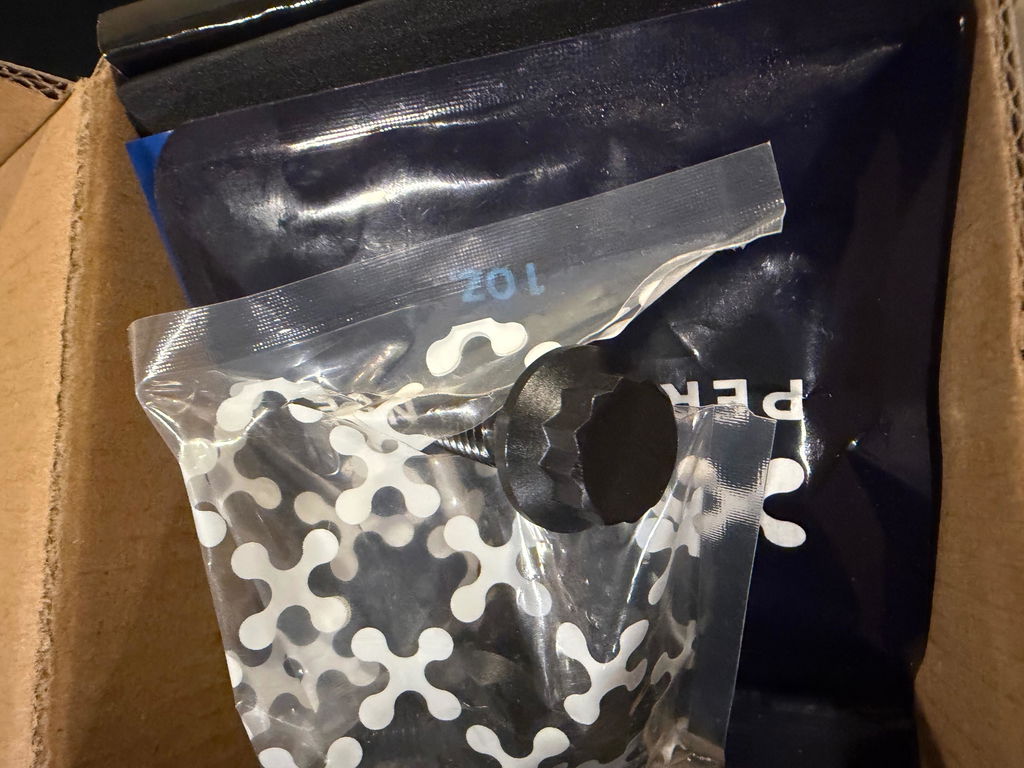
What's in the CP885 kit
- 14 × main studs (XOTIC 7200 alloy)
- 14 × hardened parallel washers
- 14 × nuts
- 1 × socket
- 1 × allen wrench
- 1 × fastener assembly lubricant
Before you start: verify first
Confirm that part number CP885 is compatible with your application before installing any components. Inspect all package contents for damage and clean as necessary to ensure accurate installation. Report any obvious defects or shipping damage to us before proceeding.
How to install main studs on a Nissan L24, L26 or L28
- Chase the block threads. Clean the threads in the block with a thread chaser prior to installing the studs, to ensure accurate fitment and precise torque readings. The correct tool here is the M10 x 1.50 chaser (CS319), available separately.
- Thread the studs in by hand. Screw the main studs in as tight as can be made by hand — no tool necessary, and do not apply torque. Loctite may be used for permanent stud installation, but the fasteners must be fully torqued before the Loctite sets.
- Check stud height with a straightedge. Use a straightedge ruler to measure the distance from the mating surface (deck or main cap) to the top of each installed stud. Ensure all studs of the same length group sit level with each other (within 1 mm / 0.040”). Uneven height may indicate debris or incorrect thread engagement. Properly installed studs will bottom out smoothly and show uniform height across all positions. If a stud appears higher or lower than the others, remove it, re-clean the hole, and reinstall by hand. Do not use tools to force studs deeper. Incorrect stud seating can cause off-angle stress, uneven preload, or stud fracture during engine operation.
- Install the main caps. Set the caps in place and ensure appropriate alignment before any load goes on them.
- Lubricate. Using the fastener assembly lubricant included in the package, lubricate the threads of the main studs and the nuts.
- Hand-tighten the nuts. Thread the nuts onto the studs as tight as can be made by hand.
- Torque in three equal steps. Working in the sequence shown in the manual's torque sequence diagram, tighten the nuts through the three stages below. Never go straight to the final value.
- Check the bores. With the studs torqued, check the main bores for size and roundness before the crank goes back in.
Nissan L24 / L26 / L28 main stud torque specs
| Stage | Torque |
|---|---|
| 1 | 20 ft-lbs |
| 2 | 40 ft-lbs |
| 3 (final) | 60 ft-lbs |
A common mistake to avoid: when torquing a fastener, do not stop short of the recommended value — continue in one motion until the specified torque is achieved. If you accidentally stop short, loosen the fastener and re-torque. Stopping short and "topping up" produces unequal preload distribution across the caps and can leave a bore out of round.
Frequently asked questions
What are the main stud torque specs for a Nissan L28?
20 ft-lbs, then 40 ft-lbs, then a final 60 ft-lbs — three equal steps, following the sequence in the manual. The same values apply to the L24 and L26.
Which Datsun and Nissan models use this engine?
The L24 powered the 240Z, the L26 the 260Z, and the L28 the 280Z and 280ZX. The kit covers all three, and the same block is common in swapped Roadsters and 510s.
What thread chaser does the L-series block take?
The M10 x 1.50 chaser (CS319). On a block this old, chasing is not optional — decades of corrosion and old sealant in the threads will throw your torque readings off before the first stud is even loaded.
Should the studs be torqued into the block?
No. Thread them in finger-tight only. Torquing a stud into the block twists it while it's being stretched, which is exactly what a stud exists to avoid.
Other Nissan kits
Building something newer? See our VQ35 DOHC main stud kit (XP982) for the 3.5L V6.
Need help?
For technical support, email support@xotic-performance.com. All XOTIC PERFORMANCE™ fasteners are covered by our limited lifetime warranty. Finished your install? Tag #XOTICPERFORMANCE on Instagram for a chance to be featured.
© 2026 XOTIC PERFORMANCE™. This installation guide is an original copyrighted work of XOTIC PERFORMANCE™. Reproduction, distribution, or use of this content in whole or in part without written permission is prohibited. Doc ref: 2025.05.20 (web edition 2026.08).
PACKAGE CONTENTS
VEHICLE FITMENTS
⚠️ PROP 65 WARNING
CALIFORNIA WARNING: Cancer and Reproductive Harm - www.P65Warnings.ca.gov